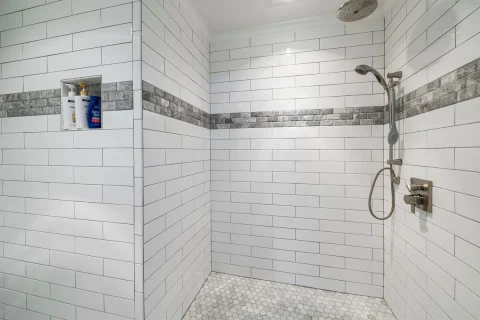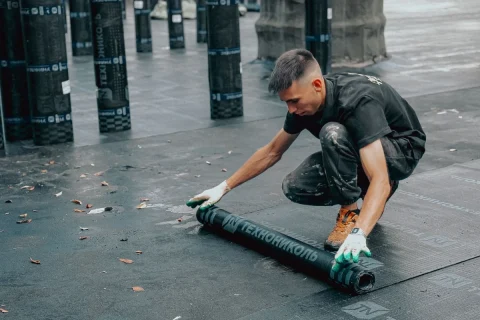
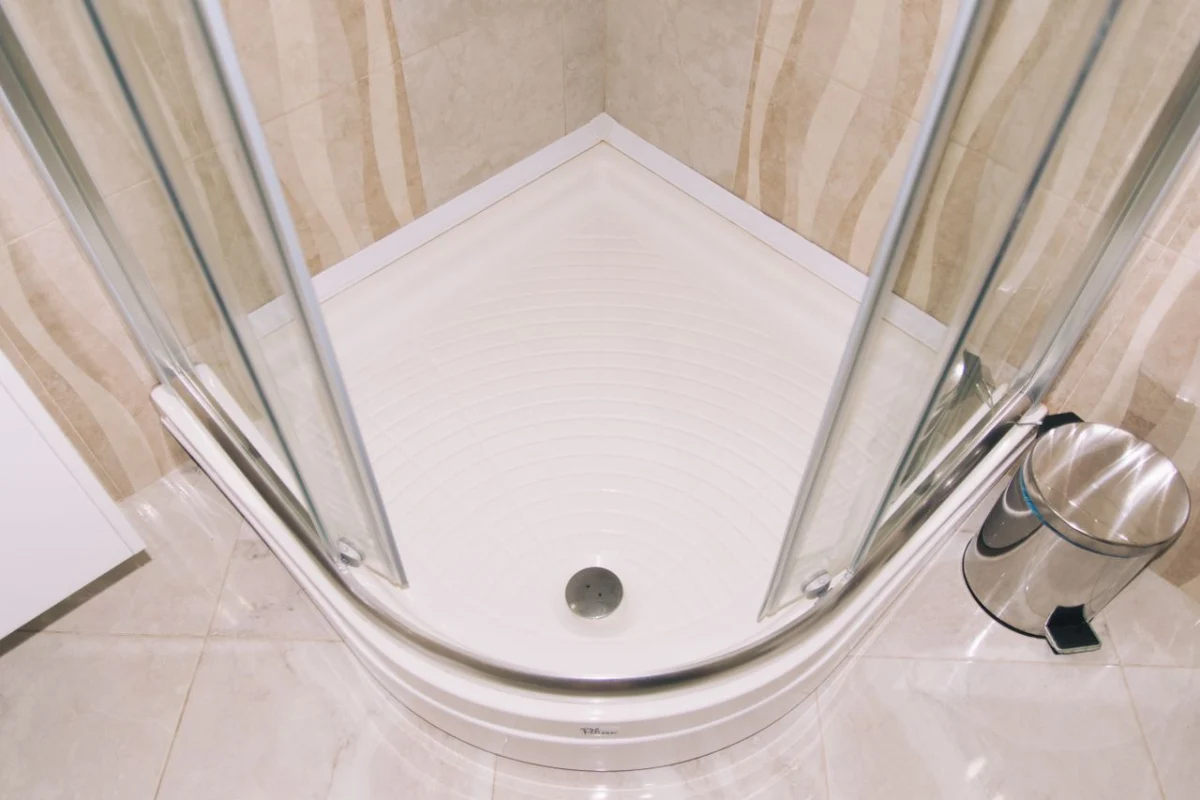
The waterproofing layer behind your shower tile is the most important, and least visible, part of any shower installation. Failure of shower waterproofing is the leading cause of catastrophic bathroom water damage: wet rot destroying framing, mold colonies behind tile, subfloor degradation, and the complete tear-out of a tile installation that may have cost $15,000–$60,000. Understanding the three major waterproofing system categories (Kerdi, Wedi, and RedGard) and how to choose between them for your specific project is essential knowledge for any homeowner planning a tile shower renovation or new construction bathroom.
This guide explains the technical basis of each system, their strengths and limitations, proper installation requirements, and the scenarios where each is the correct choice. Waterproofing is not where you cut corners, but it's also not where you need to overthink. The right system properly installed is fail-safe; the wrong system improperly installed fails.
Why Traditional CBU (Cement Board) Is Not Waterproof
One of the most persistent misconceptions in residential construction is that cement board (HardieBacker, Durock, PermaBase) is waterproof. It is not. Cement board is water-resistant (it won't disintegrate when wet the way drywall does), but it is porous and will absorb water that penetrates through tile and grout joints. Over time, saturated cement board can contribute to mold growth, retain moisture against framing, and provide an unstable substrate as it repeatedly wets and dries.
The current industry standard, per the Tile Council of North America (TCNA) Handbook and ANSI A108.02, is that shower substrates must incorporate a true waterproof membrane, either as a sheet membrane (Kerdi, Wedi) applied over the substrate, a liquid-applied membrane (RedGard, Hydro Ban) applied over the substrate, or a foam panel system (Wedi, Schluter Kerdi-Board) that is itself the substrate and waterproofing in one. CBU with no membrane is a legacy installation method no longer recommended by TCNA for shower applications.
Key fact: TCNA Method B415 (the current standard for bonded waterproof membrane shower installation) requires that the waterproof membrane achieve a minimum of 28 days cure before flood testing. A properly installed TCNA B415 shower should pass a 24-hour flood test (plug the drain, fill to curb height, no water migration into substrate after 24 hours). This test is the definitive verification of waterproof installation quality. Professional tile contractors performing quality work will perform this test and document results before tiling over the membrane.
System 1: Schluter Kerdi, Sheet Membrane Waterproofing
What Kerdi Is
Schluter Kerdi is a polyethylene sheet membrane with fleece bonding on both surfaces. The fleece allows the membrane to be bonded into a thin-set mortar bed on both sides, bonded to the substrate and then tiled over the top. Kerdi is not a stand-alone waterproof membrane, it works as part of the Schluter system including Kerdi-Band (seam tape), Kerdi-Kereck (corner pieces), Kerdi-Drain, and proper thin-set bonding.
Kerdi Strengths
- Proven track record: Schluter-Kerdi has been the professional installer's preferred system for 20+ years; enormous installation base with excellent long-term performance data
- Bond integrity: When the fleece is properly bonded into unmodified thin-set mortar (required for Kerdi: polymer-modified thin-set is not compatible with Kerdi bonding), the membrane becomes part of the tile assembly
- Seam system: Kerdi-Band seam tape provides a reliable seam treatment at all inside corners, changes in plane, and penetrations, the most common failure points in waterproofing systems
- Integrated drain: Schluter Kerdi-Drain integrates directly with the membrane for a continuously waterproof floor assembly; no separate drain flashing needed
- Large format tile compatibility: Kerdi-Board (the foam board version) provides the substrate flatness required for large-format tile installation
Kerdi Requirements and Common Mistakes
- Unmodified thin-set only: Kerdi MUST be bonded with unmodified (dry-set) thin-set mortar, not polymer-modified. Using polymer-modified thin-set behind Kerdi creates a vapor barrier that traps moisture and prevents proper bonding. This is the single most common Kerdi installation error
- Coverage: 100% mortar coverage behind the membrane (no voids) is required for proper waterproofing and tile support
- Overlap: All seams must have Kerdi-Band overlapping at least 2" on each side; corners must use pre-formed Kerdi-Kereck or properly overlapped band; all penetrations (pipe, niche) require Kerdi-Pipe or properly sealed band treatments
System 2: Wedi, Foam Board Substrate + Waterproofing
What Wedi Is
Wedi is a different approach: extruded polystyrene foam core panels with a factory-applied glass fiber reinforced polymer coating that is itself waterproof. Wedi replaces both the cement board substrate and the waterproofing membrane in a single panel. The panels are screwed to framing (or bonded over existing substrate), seams sealed with Wedi Sealant or Wedi Joint Sealant, and tile installed directly over the panel surface.
Wedi Strengths
- True waterproof substrate: The panel itself is waterproof: unlike cement board, Wedi panels have zero water absorption. The system relies on a waterproof substrate rather than a membrane applied to an absorbent substrate
- Lightweight: At approximately 0.3 lbs/sq ft, Wedi panels are dramatically lighter than cement board (HardieBacker is 2.5 lbs/sq ft), relevant for wall applications with limited framing
- Pre-formed niches, benches, and bases: Wedi manufactures an extensive system of pre-formed shower components (shower niches, shower benches, shower bases (curbed and curbless)) that integrate directly with the panel system for a complete waterproof solution
- DIY-accessible: Wedi's approach is more forgiving for DIY installers than Kerdi; the panels are waterproof even if seam sealant application isn't perfect (though proper seam treatment is still required)
- Compatible with polymer-modified thin-set: Unlike Kerdi, Wedi is compatible with standard polymer-modified thin-set mortars
Wedi Considerations
- Cost: Wedi panels cost $4–$8/sq ft vs HardieBacker at $0.60–$1.00/sq ft: significantly higher substrate cost, partially offset by eliminating separate membrane cost and membrane installation labor
- Seam treatment: All seams, corners, and penetrations must be sealed with Wedi Sealant; the system is only as waterproof as its weakest seam
- Panel size limitation: Standard Wedi panels are 48"x60"; larger showers require multiple panels with seams; each seam is a potential failure point that must be properly sealed
System 3: RedGard, Liquid-Applied Waterproofing
What RedGard Is
RedGard by Custom Building Products is a liquid-applied waterproof membrane, a rubber-based compound applied like paint to a substrate (typically cement board) and cured to form a continuous waterproof membrane. Other competing liquid-applied membranes include Laticrete Hydro Ban, Mapei Mapelastic AquaDefense, and USG Durock Tile Membrane.
RedGard Strengths
- Cost: RedGard material cost is low: a quart covers approximately 35–40 sq ft; a gallon covers 35–50 sq ft applied at 30 mils thickness; significantly cheaper than Kerdi sheet or Wedi panels per square foot
- Simplicity: Applied with a roller or brush over cement board; no thin-set bonding, no fleece overlap, no panel installation; straightforward for DIY and professional use
- Flexibility: Liquid membrane conforms to any substrate shape, including curved surfaces and complex geometry that sheet membranes cannot easily accommodate
- Visual cure indicator: RedGard applies pink and dries to red: the color change indicates cure; easy to verify coverage and identify thin spots
RedGard Requirements and Limitations
- Film thickness is critical: RedGard must be applied to minimum 30 mils dry film thickness: this requires two full coats applied perpendicular to each other; one thin coat is inadequate and will not be waterproof
- Seam reinforcement: All inside corners, changes in plane, and penetrations must be reinforced with RedGard fabric tape embedded in wet RedGard; liquid membrane applied without fabric at these stress points is vulnerable to cracking
- Substrate dependency: RedGard is only as good as the substrate it's applied to; applied over standard drywall, it does not make drywall a suitable wet area substrate: the TCNA requires cement board or equivalent as the substrate beneath liquid-applied membranes in showers
- Cure time: Full cure before tiling is important; manufacturer specifies 24 hours minimum but 48–72 hours in higher humidity conditions is better practice
Pro tip: For DIY shower waterproofing, the choice between RedGard and Kerdi depends on your project scope. For a standard single-wall shower alcove or tub surround, RedGard over cement board is an accessible, cost-effective approach that performs well when applied at proper thickness with fabric tape at seams. For a custom curbless shower, a shower with a mortar-bed floor, or any application where maximum long-term confidence is needed, Schluter Kerdi or Wedi's panel system provides more robust protection with more forgiving installation mechanics. Whichever system you choose, do the flood test: plug the drain, fill the pan to 2" depth, wait 24 hours, and inspect the ceiling below for any moisture, before setting a single tile.
Choosing the Right System for Your Project
New Construction Shower, Professional Installation
Best choice: Schluter Kerdi or Wedi
Professional installers working with new framing have full access to substrate installation: Kerdi-Board or Wedi panels replace cement board entirely, providing a flat, lightweight, thermally non-conductive substrate with integrated waterproofing. Most professional tile contractors in the quality segment have standardized on Kerdi or Wedi systems.
Shower Renovation Over Existing Cement Board
Best choice: RedGard or Kerdi sheet membrane over existing substrate
If existing cement board is sound and flat, applying RedGard (two coats, fabric at seams) or Kerdi sheet membrane over it provides a cost-effective upgrade path without full substrate replacement.
DIY Tub Surround or Simple Shower Alcove
Best choice: RedGard over cement board
Accessible materials, brush/roll application, clear cure indicator, and forgiving application mechanics make RedGard the most accessible DIY waterproofing system for standard alcove applications.
Curbless Shower or Wet Room
Best choice: Wedi or Schluter Ditra with Kerdi
Curbless showers require a sloped floor mortar bed that is itself waterproofed; Wedi's shower base system or Schluter's Kerdi-Shower-ST mortar shower tray provide engineered solutions for this complex assembly that liquid membranes over a hand-floated mortar bed do not match for reliability.
Summary: All Three Systems Work When Installed Correctly
Kerdi, Wedi, and RedGard are all proven waterproofing systems that work when installed according to manufacturer specifications and TCNA requirements. The failure mode for all three is identical: improper seam treatment, inadequate thickness or coverage, or shortcuts at penetrations. Choose the system that matches your installer's expertise, project scope, and budget, then insist on a 24-hour flood test before tiling. Waterproofing done right means a shower that lasts 30+ years without water damage; waterproofing done carelessly means one of the most expensive renovation failures a homeowner can experience.